As organizations rethink the role of the office and encourage employees to spend more time working in-office, much of the conversation has focused on what happens inside the building. Floor plans are being reconsidered, collaboration spaces are evolving, and amenities are being added to create a workplace that better supports how people work today.
But the workplace experience does not begin—or end—at the front door.
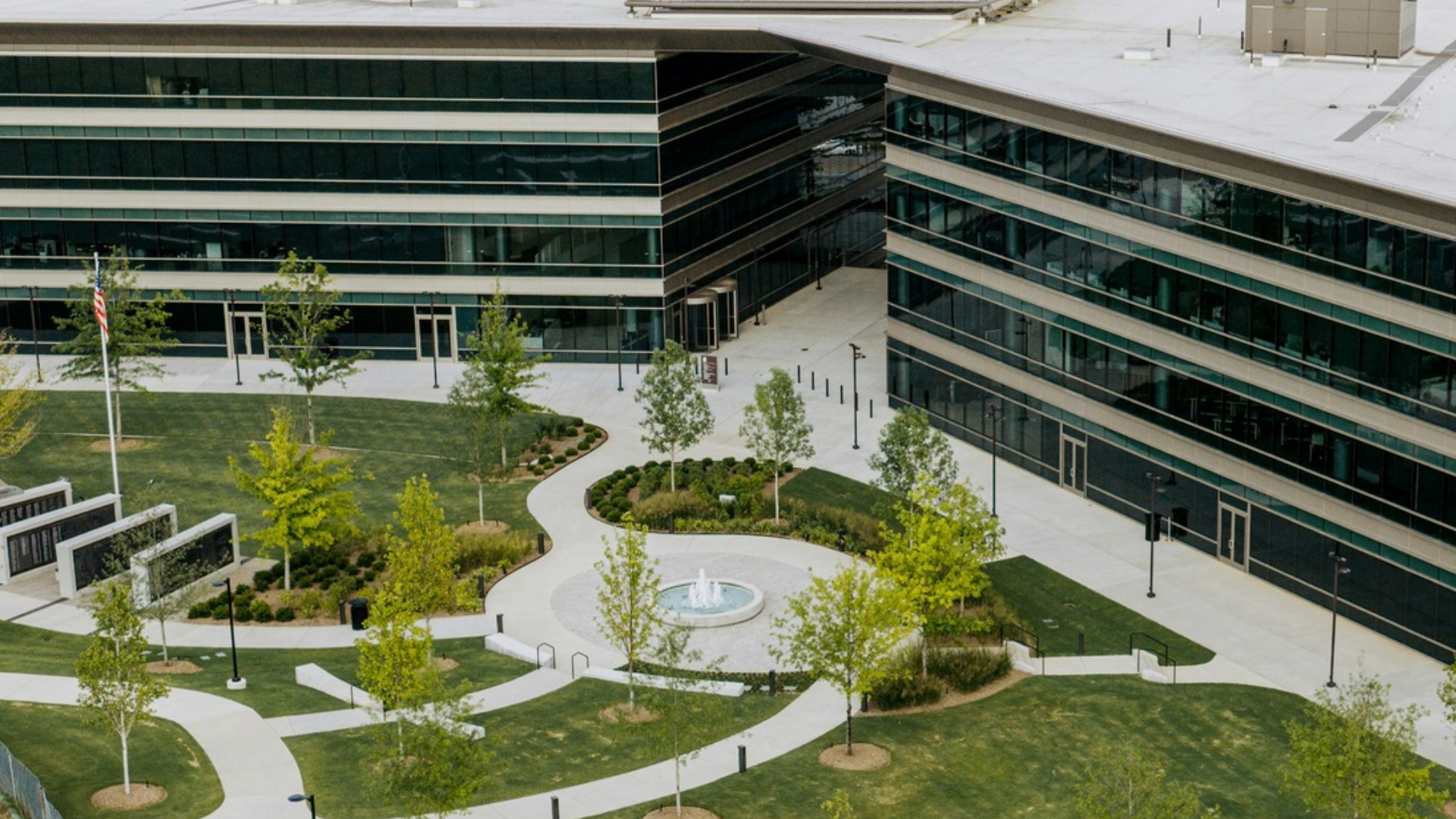
Parking areas, walkways, entry plazas, courtyards, patios and surrounding landscapes all contribute to how employees experience a workplace. Yet these spaces between destinations can be as important as the destinations themselves.
Thinking differently about the space outside the building can create more opportunities for people to step away from their desks, connect with coworkers, and use the workplace in different ways throughout the day. These spaces are not just an accessory, they are significant places that can add value to the daily life of an employee and the company as a whole.
Looking Beyond the Building
For many office properties, the outdoor environment serves a primarily functional purpose. It gets people from their cars to the building, manages stormwater, provides ordinance– required landscaping around the site, and creates a recognizable entrance.
Those functions are important, but outdoor spaces can do much more.
A courtyard can become a place for an informal meeting. A shaded seating area can provide somewhere to work between appointments. A walking path can offer employees a short break to go for a stroll. Even a small area near an entrance can provide opportunities for seating, gathering or seasonal events.
The intent is not simply to develop a large outdoor workplace, but to better utilize the site as a whole to enrich the daily experience of its users. By evaluating the property comprehensively, opportunities can be identified for spaces to support multiple functions and provide greater value to the people who work there.
Creating Different Ways to Use the Workplace
Just as an office includes different spaces for different types of work, outdoor areas can provide a variety of settings.
Some employees may want a table where they can open a laptop or meet with a coworker. Others may simply want a bench away from the building for a quiet break. Larger gathering areas can accommodate team lunches, employee events or informal conversations.
Providing a mix of spaces, with different functions, allows employees to decide how they want to use the outdoors rather than prescribing one activity.
Small changes can make a difference. Seating walls, movable tables and chairs, shade trees, pedestrian connections, and gathering areas can turn spaces people use only to pass through to places they want to spend some time and enjoy more of their day, often leading to more productive work.
Comfort Determines Whether a Space Gets Used
Creating an outdoor area does not automatically mean people will use it.
Sun exposure, wind, noise, temperature and proximity to traffic can significantly influence whether a space feels comfortable. A patio placed in full afternoon sun with no shade, for example, may have limited usefulness during the warmer months. Seating located next to a busy driveway or parking lot may technically provide an outdoor amenity but may not create an environment where employees want to spend time.
Shade structures, tree canopy, planting, wind protection and thoughtful placement can help address these conditions.
Michigan’s changing seasons are another consideration. Outdoor workplace spaces will naturally have periods of greater and lesser use but designing for changing conditions can extend how long they remain comfortable throughout the year.
Site improvements should be approached thoughtfully and with a clear understanding of user needs. Whether through a landscape architect or an experienced design professional, even modest design input can help maximize the value and functionality of the space.
Connections Matter as Much as Destinations
An outdoor space can be well designed and remain underused if reaching it feels inconvenient.
Pedestrian circulation is an important part of the equation. Direct connections between building entrances, outdoor gathering areas, parking and surrounding sidewalks make exterior spaces easier to incorporate into everyday routines.
A walking route does not need to be elaborate. A simple loop around a property can give employees an opportunity to step outside for a few minutes during the workday. Connections to nearby sidewalks, trails, businesses or public spaces can further expand those opportunities.
Accessibility should also be considered from the beginning. Routes, surfaces, grades, seating and gathering areas should allow people with different mobility needs to comfortably use the space.
Thoughtful connections can result in an outdoor environment that functions as a connected system rather than a collection of isolated amenities.
Landscape Can Support More Than Employee Experience
The landscape surrounding a workplace also performs important environmental functions.
Plant material can provide shade and reduce heat around paved areas. Native and adapted plants can create habitat and seasonal interest. Green infrastructure can help manage stormwater while becoming part of the visual landscape. Trees and planting can also create buffers between gathering areas, parking lots and surrounding uses.
These elements allow workplace landscapes to address environmental needs while contributing to the comfort these outdoor areas provide.
Instead of separating infrastructure from amenities, thoughtful site design can look for opportunities for the same space to accomplish several objectives.
Start With How People Actually Use the Site
Improving an outdoor workplace does not always require redesigning an entire property.
The first step can simply be observing how the site functions today.
Where do employees currently gather? Are people eating lunch near the entrance because it is the only place with seating? Are there informal walking routes around the parking lot? Are there landscaped areas that people can see but cannot access? Are certain spaces consistently empty?
These patterns can reveal opportunities that may not be obvious on a site plan.
Employers can also ask employees what would make them more likely to use outdoor spaces. Their answers may point toward simple improvements such as adding some seating, shade or connections few new paved walkways rather than major construction.
A phased approach may work well to address low hanging fruit and easy fixes first while gathering resources for a larger improvement project in the future.
Extending the Workplace Beyond Four Walls
As expectations for the workplace continue to evolve, organizations have an opportunity to think beyond the building itself.
The office does not have to stop at the door. When the outdoor environment is considered part of the workplace, the whole office experience is improved and enhances the employees time in-office, even if they are taking a meeting sitting outside on the patio.